
As a new teacher I was instructed it was best to have a list of behaviors that were ‘No-No’s” and what the consequences of those would be. It was best if they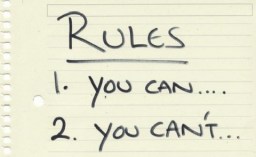 would be posted clearly in my classroom in ‘student’ language so there could be no argument or hedging if a student were caught breaking a rule. The formula was: Rules>You>Punishment. Consequences only affected the individual and there had to be a rule for everything that might happen. If an act wasn’t on the list of rules, students would argue it must be okay. Further, innocence of the offence was paramount so denial and having corroborating witnesses was effusive (lying for friends is to be expected). Punishment was not exacted for every misdeed and the list of undesirable behaviors grew ever longer and enforcement less effective.
 The next phase of on-the-job teacher training instructed me to set desirable rules of behavior, give stickers or points to students with a promise of yummy rewards to be earned: The formula read: Rules>You>Reward. Worked for a while then problems arose. True to kid logic, if it wasn’t on the list of good behaviors it wasn’t “fair” to reward students who did something helpful, because everyone else didn’t have the opportunity to know and do that. Further, recognition for performing rules was paramount and so having corroborating witnesses was effusive (lying for friends is to be expected). The rewards of yesterday were never enough because continuing to exert effort requires a higher payoff (translate: salary increase, teachers). Now you already know the flaw in this thinking. Money (reward) isn’t everything. In fact, without really enjoying what you are doing, no reward is enough to make it worthwhile. Most underpaid teachers continue because they LOVE their students and that moment the “lights” come on. Teaching becomes a great way to spend any day. Continuing with a challenging plan usually involves buy-in with the group. To some people buy-in means “What’s in it for me?” Students are quick to offer that excuse. But true buy-in means I can have an effect on something. I can find an opportunity to make change and ‘own’ a piece of the outcome. The performing arts have so much to offer with this very human desire to be a part of something bigger than oneself. The best student formula for behaviors cannot start with Rules. It starts with a moment-by-moment interaction with self and others. It should look like this: You>Engage>Effect. Students who are willing to break, bend or ignore ‘rules’ are largely unable to engage constructively (engaging destructively is NOT really engaging, I’d call it avoiding). To remind myself of this, I took down all the rules and behavior charts and put up a Three R’s poster in my classroom. Click on the link to get a printable 8.5 x 11″ master.
So I offer these word models as a place for discussion with your students. You might first talk about what would be pleasing to them as a result of their time in the class and how their engagement with the group might look. The Effect is the goal and their part in it. Can you reach consensus on a handful of mutual end results? I then asked them to come in each day, look within and decide how they wanted to be engaged that day. How would they react if another student felt differently? Could they be honest in themselves without judging others? What if they weren’t meeting their own expectations for themselves? No one knows what’s going on inside someone else’s mind and heart. On any day the same observed behavior might be a remarkable achievement for one student and regrettable for another. In another way having experiences in which no one enjoys a remarkable experience can be pretty humdrum and uninspiring.  Notably, it only takes a small spark of extreme accomplishment to make the ‘crowd’ in us explode with enthusiasm. Most sensitive students will voice that being encouraged by another student was really helpful on a hard day and that being encouraging to someone who might be having a hard time engaging was really important to try to do. That takes the demon out of destructive behaviors and gives empathy, not power, to the student avoiding engagement, both from other students and from us as teachers. There is no need to verbally check in every day, but once in a while or at the end of an accomplishment helps everyone including the teacher be mindful. You know the reality of engagement most of the time and you may forget to check in because you are enjoying the experience together. You may be reminded to check in because NO ONE is engaged, and for a very good reason. But don’t forget to ask because the student who has never spoken up may one day tell you what you could never have guessed. Invite your students to ask themselves:
How will I feel during today’s class?
How do I feel at the end of today’s class? Why do I feel that way?
I feel R_______; because__________
Remarkable: a leader, giving; thinking of ways to go above and beyond what’s expected in the group,
Responsible: full participant, sharing; always working with directions for good of the group
Regrettable: non-participant, draining; missing chances to grow personally, engage and build up the group
AND lest you think I never incentivize for a reward look ahead for my blog thoughts on competition! Coming soon.

 RecapitulationSong