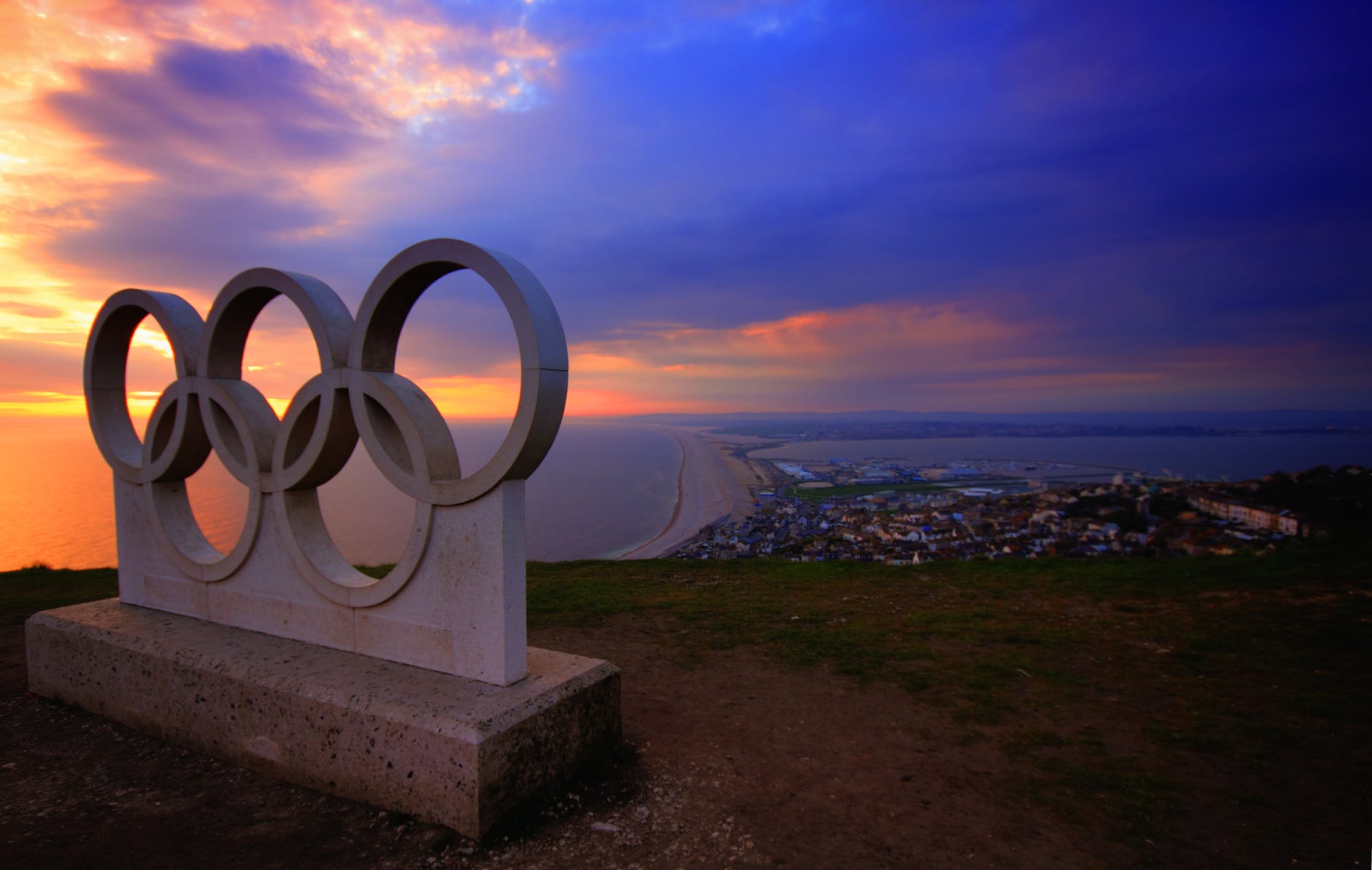
Can you imagine the thrill of competing at the first Olympics? You’ve entered the arena for a chariot race and you are standing on the starting line, ready to race, holding a book of everything you know about chariots. One of the other competitors asks why you think you are ready to race. You explain that your teacher has given you a course of study from a curriculum for driving a chariot and you feel prepared. As the others speed away in the dust, you might wish your teacher had given you a chariot instead.
I am not a student of Latin. I’ve learned, as most students of English have, that certain Latin words and phrases have persisted in some form from the Roman Empire through the Middle Ages to modern usage with few or no changes: e.g., quid pro quo. Many more prefixes, roots and suffixes also persist within words we commonly think of only in our native English. When we study one of the Romance languages, we understand these roots as aids to vocabulary translation because they have common Latin (Roman) roots.


Curriculum’s Roots
- curri: from the Latin: run/trot/gallop, hurry/hasten/speed, move/travel/proceed/flow swiftly/quickly
- -culum: a suffix used to form nouns derived from verbs, particularly nouns representing tools and instruments; the means by which the action is performed (vehicle).
- “a running, course, career” (also “a fast chariot, racing car”)
From: Online Etymology Dictionary and The Free Dictionary by Farlax
https://www.etymonline.com/word/*kers-?ref=etymonline_crossreference

Etymology is fascinating. No doubt my third grade teacher who asked me to copy pages from the dictionary as a reprimand for talking when I should have been listening, regarded it as an educationally valuable task. She surely knew I’d be copying those italicized mystery codes such as O.F. and M.E. and would soon be introduced to the concept of Old French and Middle English in the development of language. Enter the root and suffix: curri and -culum.
At first I imagined that since the Latin root curri was the verb for moving or running, the noun must mean the path. That is a common meaning today for curriculum. It is synonymous with a course. Who knows if when the Latin word came into use in Scottish universities of the 17th century its meaning lay closer to the Latin: a tool or instrument for moving fast as for a race.
Now that’s exciting! Even a little dangerous sounding! I confess I am a bit put off by the metaphor of speed in regards to life or education. Rushing through a course is not always a positive experience. Education should not be a competition. Life is not a race nor an event with winners and losers. However, the insights that Olympic athletes and serious runners have shared about the sport center on the practice of focusing not on beating other people, but on beating their personal best times.
Finishing first is not the ultimate plan. They measure their achievement by building up their physical “machine” and propelling their bodies off the starting line. They have created a vehicle for themselves that moves with strength and purpose.


I have heard authors claim that this or that curriculum is strong and purposeful. I can’t help asking why many current curricula fail to meet that power-purpose standard. I wonder if, instead of giving our students the keys to the car, which makes us a bit nervous, these guides give students nothing more than a generic owner’s manual (a textbook and their notes) and a entry ticket to the race’s starting line (a diploma). These kinds of “course” manuals advance concepts they need to know ABOUT a car and where a race begins, but they are NOT the car.
And they cannot provide the momentum to move students to that starting line and to the course beyond. They offer no vehicle, no instrument, that will convey students along the race they are entering. There aren’t actually any tools (whether for guidance or maintenance or repair) in a concept; no “instrument” which converts the verb “curri-” into an actual traveling motion. An owner’s manual has no tires that contact the track surface; no drive shaft to turn the axle; no radiator to protect the vehicle from overheating.
What successfully moves our students forward will not be content from a page, nor writing on notebook paper in a three-ring binder. Accumulating checklists of the content to be covered does not equip students to move. Students need to proceed – make their own way – to the track. They need confidence in who they are as a driver, how to handle the vehicle, and what they are going to do in situations that may occur in the race. Curriculum must not be reduced to a listing of concepts to be learned through a litany of units and chapters and tests (i.e., pages in a user’s manual). A model curriculum should include experience with building the engine, steering the vehicle, seeing long distances clearly, avoiding obstacles, slowing down on curves, accelerating on the straightaways, knowing how to pull into the pit and change out the brake pads without losing momentum. These are the metaphors for a valuable curriculum: the tools and instruments used to move us forward. When you choose what you consider an ideal for your course curriculum, ask yourself whether what you implement looks more like a manual or more like a car.
No one learns to drive by reading the owner’s manual. No one starts by driving a race car at INDY, but most everyone can remember their first wheels. Many can recall sitting behind the wheel of a car belonging to someone who trusted us. The car wasn’t even running. Often our teacher had to boost us up on their lap so we could see over the dashboard. We put our hands on the wheel, produced a resounding, “Vroom vroom!” and soon were telling everyone we drove a car that day.
If we are satisfied with offering an owner’s manual, students cannot learn to drive. If we only help them to pass the written driver’s test, they cannot get a license. If we don’t provide our students with the –culus: the vehicle, including the keys, the fuel, and our trust, they have nothing to convey them through their very real-life curri-: race. This is the point of any curriculum: forward movement. Sadly, some documents that get labeled such cannot even move a feather! It’s true that some curriculum ‘vehicles’ our students will bring to our classroom might need rebuilding. Teachers need multiple skill sets, and having a schematic is no substitute for getting your hands in the grease.

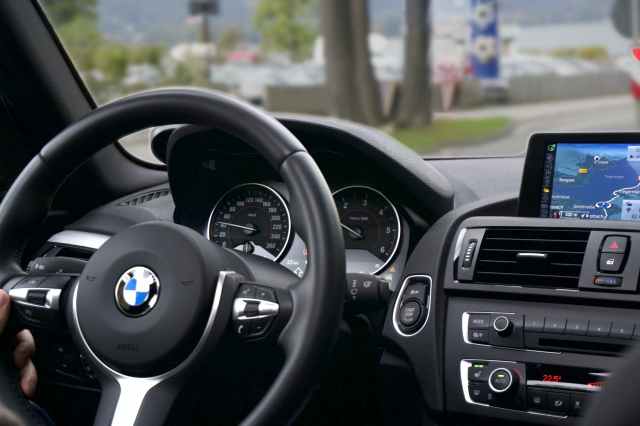

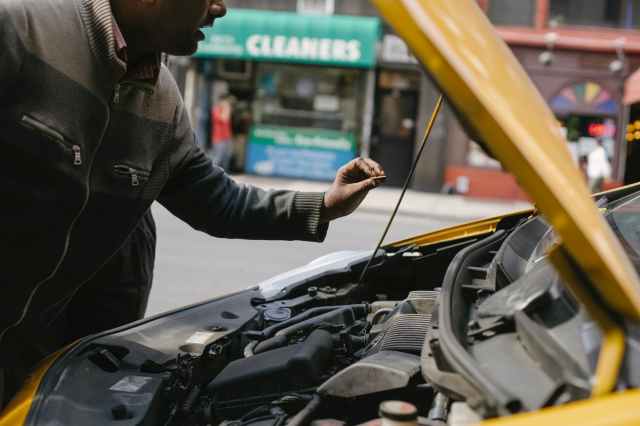

When you come across a modern curriculum, treat those checklists and tests as you would an owner’s manual with troubleshooting tips; and remember that what your students need you to give them is their own vehicle and time behind the wheel so they will be prepared to run their race. This is a strong curriculum and your students might get pretty excited about that. I wonder how you say, “Start your engines!” in Latin.

 RecapitulationSong